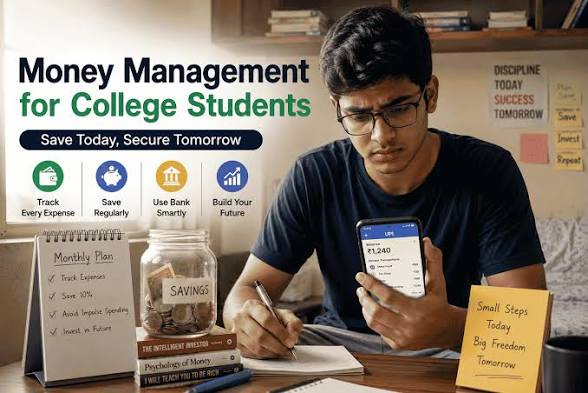
How to Save and Invest Money as a College Student in India
Most college students think saving and investing is something to start after getting a job. That is one of the biggest financial mistakes. Even small amounts saved and invested during college can build useful habits and grow into something meaningful over time.
You do not need a high income to begin. What you need is consistency and a simple system. This guide explains how college students in India can start saving and investing in a practical way.
Why Students Should Start Early
The biggest advantage students have is time. When you invest early, your money gets more years to grow. A student who invests small amounts regularly from age 18 or 19 often builds a much stronger foundation than someone who starts only after 25 or 30.
Starting early also builds discipline. You learn how to manage money before bigger responsibilities arrive.
Step 1: Track Where Your Money Goes
Before saving, understand your spending. For one or two weeks, note down where your money is going — food, travel, mobile recharge, entertainment, and college expenses.
Most students are surprised when they see how much goes into small daily spends. Once you know the pattern, it becomes easier to cut unnecessary expenses without feeling restricted.
Step 2: Build a Basic Saving Habit
Saving does not mean stopping all enjoyment. A simple method is to save first whenever money comes in, whether it is pocket money, internship stipend, or side income.
Even ₹500 to ₹1,000 per month is a good start. The amount matters less than the habit. Keep this money in a separate savings account so you do not spend it accidentally.
Step 3: Create a Small Emergency Buffer
Before investing, keep some money aside for unexpected needs like phone repair, medical expenses, or urgent travel. This can be a simple savings balance or a liquid fund.
Even ₹3,000 to ₹10,000 as a starting buffer is useful. The goal is to avoid borrowing for small emergencies.
Step 4: Start Investing with SIPs
For most students, the simplest investment option is a mutual fund SIP. SIP means Systematic Investment Plan, where you invest a fixed amount every month.
You can start with as little as ₹500 per month. Beginners are usually better off with index funds, such as those tracking Nifty 50, because they are simple, diversified, and low cost.
To start, you generally need:
– PAN card
– Aadhaar
– Bank account in your name
– KYC completion on a mutual fund platform or app
Popular beginner-friendly platforms make this process easy through mobile apps.
What Students Should Avoid in the Beginning
Avoid these common mistakes:
– Trading stocks daily without knowledge
– Putting money into random tips from social media
– Investing money you may need in a few months
– Expecting quick high returns
– Using money meant for fees or important expenses
Investing should be calm and long-term, not exciting and risky in the beginning.
Simple Money System for Students
A practical structure looks like this:
– Some money for monthly expenses
– Some money for saving and emergency needs
– A small fixed amount for SIP investment
– The rest for personal use
If your monthly inflow is low, keep the investment amount small. The habit is more important than the size.
How Much Returns Should You Expect?
Do not expect fixed or guaranteed high returns from market-linked investments. Equity mutual funds can go up and down in the short term. That is normal.
The benefit comes when you stay invested for years. Students should think in terms of 5, 7, or 10 years, not a few weeks or months.
Useful Principles to Remember
– Start small, but start
– Increase the amount when your income increases
– Do not stop SIPs only because markets are falling
– Keep learning basic personal finance
– Review your investments once or twice a year, not every day
Final Thoughts
Saving and investing as a college student is less about becoming rich quickly and more about building control over your money. Even modest amounts, invested consistently, can create a strong base by the time you start working full-time.
Begin with tracking expenses, saving a small fixed amount, keeping a basic emergency buffer, and starting a simple SIP if you are ready. Stay patient and avoid complicated products in the beginning.
The students who learn to manage money early usually feel more confident later, not because they earned the most in college, but because they built the right habits before life became more expensive.